
Additional support for heating cold-weather buildings
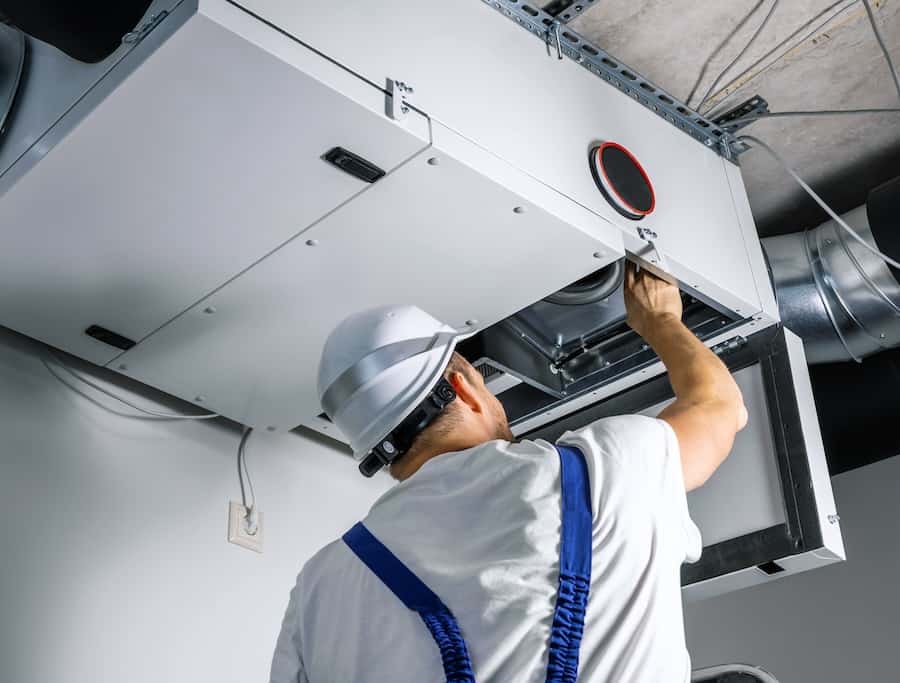
Heat recovery systems are designed to deliver exterior air re-warmed and filtered into your building. They’re a great way to maintain energy efficiency since they help the primary heating systems work well, especially in cold winter temperatures.
Reduce maintenance costs on your primary heating system
Whether your building uses traditional air-based heating systems, boilers, or even geothermal heat, a heat recovery system can help maintain comfortable temperatures inside, even when outdoor temperatures plummet.
Heat recovery takes external air or even air from warm spaces, like a kitchen, and circulates it into a building as pre-warmed air. This gives your primary heating system a head start on heating the building to an optimal temperature.

Reduced moisture and fresh air circulation
A well-designed heat recovery system can improve indoor air quality by reducing the amount of moisture in the air. This lower humidity can be a real benefit for places where mold or mildew are concerns, like in healthcare, food processing, or sensitive manufacturing facilities.
The reduced condensation in the air can also prolong the life of sensitive electronics, equipment, and other high-cost appliances and fixtures.
Numerous heat recovery system options are available depending on your building
Heat recovery systems aren’t for every building. The size of your building, existing air flow, occupancy rates, room sizes and quantity, and other environmental factors require careful study. Otherwise, the system may deliver diminished returns on your investment or be unnecessarily installed.
Our team of mechanical engineers will identify what heat recovery systems are most appropriate, where necessary infrastructure exists or needs installing (such as exhaust and air flow systems), ductwork audits and installation, and more. Contact an engineer to get started on heat recovery system design.
Request more information
An engineer is a phone call or email away.